David Bohm speaks about Wholeness and Fragmentation
Excerpt from the documentary "Art Meets Science and Spirituality in a Changing Economy - From Fragmentation to Wholeness" Artists, scientists, spiritual leaders and economists gathered in Amsterdam in 1990 to explore the emerging paradigm of a holistic world view and the implications for a global economy. The five day confernce, Art Meets Science and Spirituality in a Changing Economy was inspired by the artists Joseph Beuys and Robert Filliou, and manifested by Louwrien Wijers, who called it a "mental sculpture."
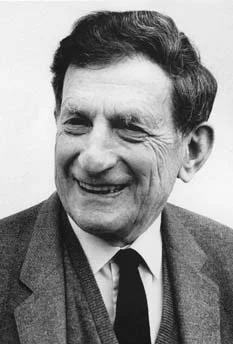
David Bohm
David Joseph Bohm (20 December 1917 – 27 October 1992) was an American scientist who has been described as one of the most significant theoretical physicists of the 20th century and who contributed unorthodox ideas to quantum theory, neuropsychology and the philosophy of mind. Among his many contributions to physics is his causal and deterministic interpretation of quantum theory known as De Broglie–Bohm theory.
Bohm advanced the view that quantum physics meant that the old Cartesian model of reality—that there are two kinds of substance, the mental and the physical, that somehow interact—was too limited. To complement it, he developed a mathematical and physical theory of "implicate" and "explicate" order. He also believed that the brain, at the cellular level, works according to the mathematics of some quantum effects, and postulated that thought is distributed and non-localised just as quantum entities are. Bohm's main concern was with understanding the nature of reality in general and of consciousness in particular as a coherent whole, which according to Bohm is never static or complete.
“some might say: ‘Fragmentation of cities, religions, political systems, conflict in the form of wars, general violence, fratricide, etc., are the reality. Wholeness is only an ideal, toward which we should perhaps strive.’ But this is not what is being said here. Rather, what should be said is that wholeness is what is real, and that fragmentation is the response of this whole to man’s action, guided by illusory perception, which is shaped by fragmentary thought.”
― David Bohm, Wholeness and the Implicate Order